Why western playbooks underperform at B2B networking events in the Middle East
Many founders arrive at B2B networking events in the Middle East with polished pitches but misaligned expectations. They anticipate fast transactions at each event, while Gulf business culture in the United Arab Emirates and Saudi Arabia prioritises trust, continuity and personal rapport before any serious business will move forward. This gap explains why the same networking scripts that work in London or New York often stall at Dubai trade shows or Riyadh B2B summits.
In this region, a business forum in Dubai or Abu Dhabi is rarely a one off touchpoint. It is one step in a longer relationship arc where industry leaders observe how you behave across several events, from a summer networking reception to a formal exhibition conference at a major convention centre such as Dubai World Trade Centre or Riyadh Front. The most successful decision makers treat these gatherings as a structured networking system, not as isolated opportunities to close deals.
Gulf Cooperation Council markets across Saudi Arabia, the wider Middle East and the rest of the Arabian Peninsula share this relationship first mindset. Cultural intelligence, defined as the ability to read the room and adapt behaviour across cultures, becomes a core business skill at any summit, awards gala or front exhibition. As Ang and Van Dyne’s 2008 overview of cultural intelligence research notes, “cultural intelligence includes metacognitive, cognitive, motivational, and behavioral dimensions” that shape how effectively people operate across borders.
For a founder targeting B2B networking events in the Middle East, this means reframing ROI. The real metric is not how many badges you scan at Dubai exhibitions or at a Riyadh international trade fair, but how many industry leaders remember you as respectful, relevant and reliable. That shift in perspective will change how you plan your upcoming events calendar, how you use each event website to prepare and how you follow up after every meeting.
The relationship first dynamic at Gulf exhibitions, summits and business mixers
Trust building at B2B networking events in the Middle East starts long before you talk about product features. In Dubai, Riyadh and Abu Dhabi, senior leaders often use a business event to test your character, patience and cultural fit before they test your pricing model. This is especially visible at large exhibition conference formats where hospitality areas and majlis style lounges sit at the heart of the floorplan.
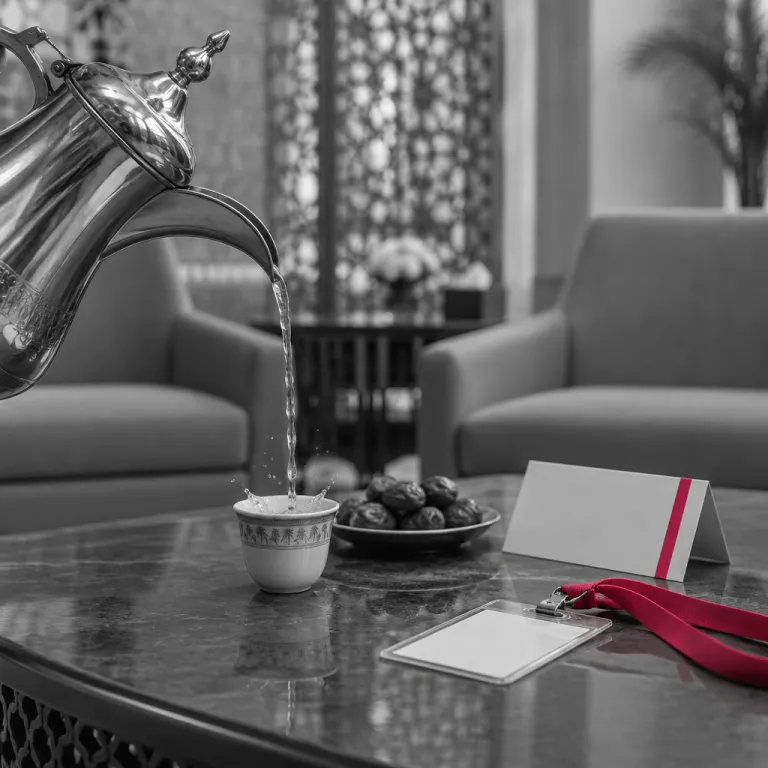
At a major exhibition in Dubai or a Riyadh international summit, you will notice that coffee, dates and informal seating occupy as much space as stands and screens. These zones are not decorative; they are where real business conversations happen, often after several light exchanges about family, travel or the future of the industry in the Middle East. Trying to push straight into commercial terms in these settings can signal impatience or a lack of respect for local norms.
Relationship first does not mean slow or inefficient business. It means that in Saudi Arabia and the wider Gulf, decision makers want to understand your intent, your long term commitment and your willingness to adapt before they allocate serious budget. Structured networking programmes, such as hosted buyer meetings or curated matchmaking sessions at events like GITEX GLOBAL or Future Investment Initiative, help compress this process by sequencing multiple touchpoints with the same leaders across a single event.
For a founder planning upcoming events, the practical implication is clear. Design your calendar around a series of touchpoints at Dubai trade shows, Abu Dhabi forums and Riyadh Saudi summits where the same industry leaders will attend repeatedly. A simple checklist helps: map your top 20 target accounts, identify which Gulf exhibitions they attend, prioritise three to five flagship events, and plan pre-event outreach, on-site meetings and post-event follow up for each.
Practical etiquette: greetings, hospitality and conversation that build real rapport
Reading the room at B2B networking events in the Middle East starts with how you greet people. In a business event in Dubai or Riyadh, a firm handshake, direct but warm eye contact and a brief exchange of pleasantries about the event details set the tone. When you meet senior industry leaders, stand up, offer your card with your right hand and take a moment to pronounce their name carefully.
Hospitality plays a central role across the Emirates and Saudi Arabia, from an exhibition centre in Abu Dhabi to a private summit in Riyadh. Accepting Arabic coffee or tea, even in a short summer networking break, signals openness and respect for local customs, while declining without a clear reason can be misread as distance. Use these moments to ask thoughtful questions about their business priorities, their view of the future of the industry or their experience with previous events in the Middle East.
Conversation topics should be chosen with care. Safe ground includes regional economic trends, innovation in your shared industry, or how global shifts are affecting the Middle East and Gulf economies, while sensitive politics or controversial social issues are best avoided in early meetings. If you are unsure how to steer the dialogue, a concise and culturally aware elevator pitch framework, such as those outlined in specialised guides to elevator pitch techniques for B2B networking events, can help you balance clarity with humility.
Etiquette also extends to time and follow up. Arriving early to a meeting at an exhibition conference or awards ceremony shows respect, but you should also be prepared for a more flexible schedule where leaders may be delayed by overlapping events. After the event, a short message that references specific event details and expresses appreciation for the hospitality will carry more weight than a generic sales email sent to every contact.
Meeting structure and follow up: from majlis to messaging apps
Formal meetings at B2B networking events in the Middle East often feel different from western boardroom sessions. In Dubai or at Riyadh international venues, you may sit in a majlis style setting with low seating, coffee service and a flow of visitors, rather than a closed door conference room. This layout reflects a more fluid approach to hierarchy and access, where several decision makers and advisers may join the conversation over time.
The pace of these meetings can appear unstructured to visitors. A discussion about a real estate project in Saudi Arabia might pause for greetings, awards announcements or introductions to other industry leaders, then resume with deeper technical questions about your solution. Your role is to stay composed, keep track of key points and adapt your narrative without pushing for a rigid agenda that clashes with the local rhythm.
Follow up channels also differ. Across the Emirates and the wider Middle East, many leaders prefer messaging apps for ongoing dialogue after an event, while email is reserved for formal documents, proposals or exhibition conference summaries. When you meet someone at a Dubai trade show or Abu Dhabi business forum, ask politely whether they prefer to continue via WhatsApp, email or another platform, then respect that choice in your communication cadence.
Structured networking does not end when the exhibition closes. Use your notes from each event website, summit agenda and exhibition floorplan to segment contacts by interest, authority level and timing, then design a follow up sequence that blends short messages, relevant content and occasional in person meetings at upcoming events. For complex or technical sectors such as geospatial or infrastructure, deep dive analyses on how specialised conferences reshape B2B strategies for Gulf decision makers can provide valuable context to share in these follow ups.
Applying cultural intelligence across Gulf event formats for measurable ROI
Cultural intelligence becomes a competitive advantage when you apply it systematically across different B2B networking events in the Middle East. At a large exhibition in Dubai, you might focus on reading body language at your booth, adjusting your approach when senior industry leaders arrive with their équipe and using the exhibition centre hospitality zones for quieter conversations. At a smaller summit in Riyadh, you will rely more on curated networking events and hosted dinners to deepen relationships with a handful of high value decision makers.
Majlis style roundtables in Abu Dhabi or awards ceremonies in Saudi Arabia require yet another calibration. Here, your goal is to contribute thoughtful insights on the future of your industry in the Middle East and Gulf region, rather than to push your product, while showing that you understand both global trends and local realities. Over time, this consistent behaviour across events signals that you are a long term partner, not a transactional visitor chasing short term deals.
Data from structured networking programmes in the Gulf illustrates how powerful this approach can be. For example, the hosted buyer programme at GITEX GLOBAL in Dubai has facilitated thousands of pre-scheduled meetings between technology vendors and enterprise buyers in recent editions, while the Future Investment Initiative in Riyadh regularly reports multi-billion-dollar memoranda of understanding announced during and after its annual forum. These outcomes show that when companies train their équipes in cultural intelligence, they improve trust and close more complex deals with industry leaders.
For a founder planning upcoming events, the practical playbook is clear. Select a focused portfolio of Dubai trade shows, Riyadh international exhibitions and Abu Dhabi summits where your target accounts will be present, then invest in training your team to read the room, adapt their scripts and use each event website to plan precise, high value interactions. Whether you operate in real estate, technology or industrial services, this relationship first, culturally intelligent approach will turn every event into a measurable asset on your Middle East growth roadmap.
FAQ
How is networking at Gulf B2B events different from western markets ?
Networking at Gulf B2B events in the Middle East is relationship first, which means leaders prioritise trust and personal rapport before discussing detailed commercial terms. Meetings often unfold in hospitality rich settings such as majlis lounges or coffee areas rather than formal boardrooms. Timelines are longer, but once trust is established, decisions can move quickly and at significant scale.
Which Gulf cities are most important for B2B networking events ?
Dubai, Abu Dhabi and Riyadh are the primary hubs for B2B networking events in the Middle East, each with a distinct profile. Dubai hosts many global exhibitions and cross industry events, while Abu Dhabi focuses more on energy, industrial and governmental forums. Riyadh and the wider Saudi Arabia market increasingly host large scale summits and sector specific exhibitions aligned with national transformation programmes.
What is the best way to follow up after a Gulf business event ?
The most effective follow up after a business event in the Gulf combines personalised messaging and respect for preferred channels. Many decision makers favour messaging apps for informal updates and clarifications, while email is used for formal proposals and documentation. Referencing specific event details and shared conversations from the exhibition or summit shows attention and reinforces the relationship.
How can I prepare my team for cultural nuances at Gulf events ?
Preparing your équipe for Gulf events requires targeted cultural intelligence training that covers etiquette, communication styles and meeting structures. Role plays using realistic scenarios from exhibitions in Dubai, summits in Riyadh and networking events in Abu Dhabi help staff practise greetings, small talk and follow up. Companies that invest in this preparation typically report higher quality meetings and stronger long term relationships with regional industry leaders.
Which formats work best for high value B2B networking in the region ?
High value B2B networking in the Middle East often happens in curated formats such as hosted buyer programmes, invitation only roundtables, VIP lounges and private dinners alongside major exhibitions. These settings allow decision makers and founders to move beyond surface level conversations and explore strategic fit in a more relaxed environment. Combining these formats with a presence at large public exhibitions gives you both reach and depth in your regional networking strategy.